Chattahoochee River Bluff Tree Stability: Preventing Steep-Slope Tree Fall
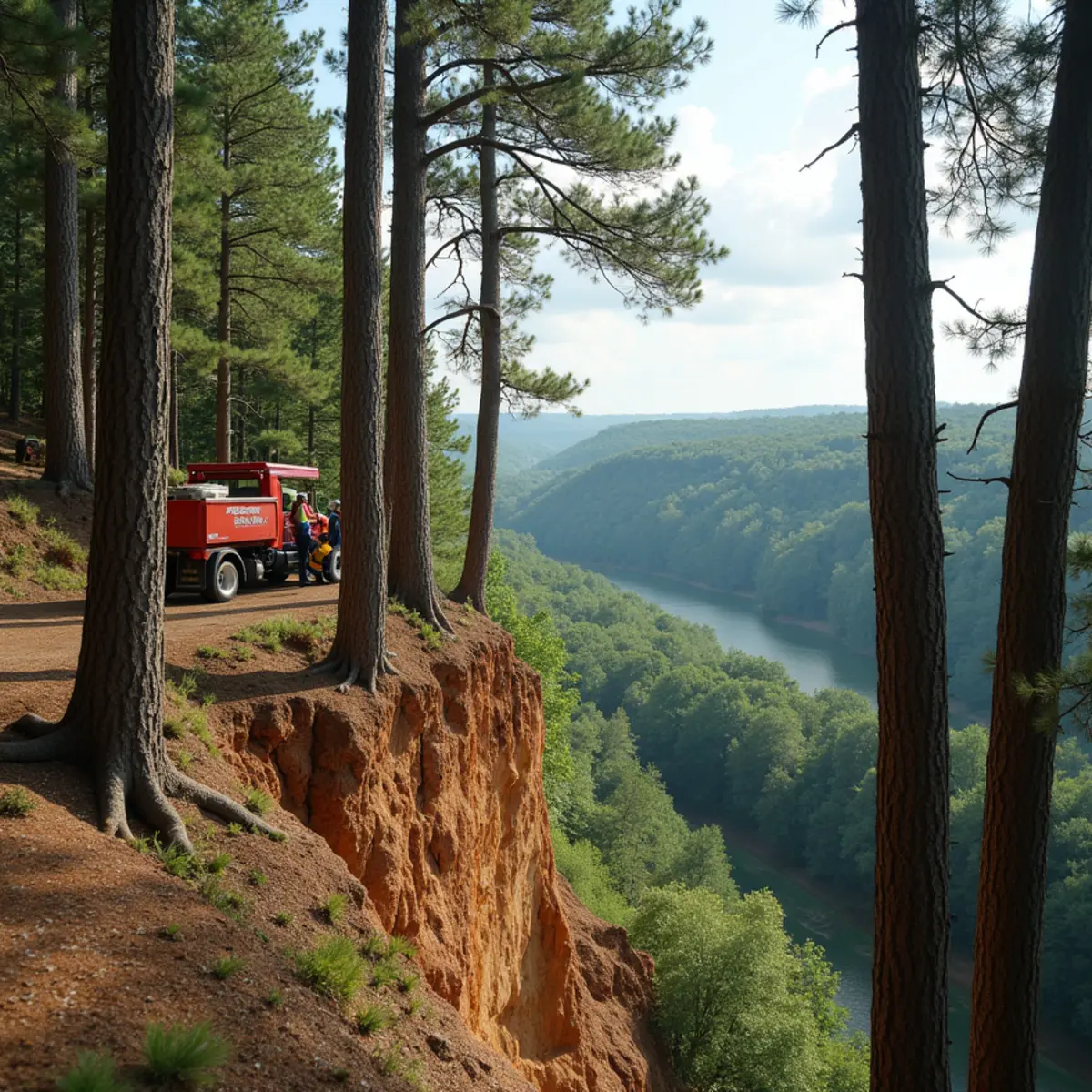
Trees on Chattahoochee River bluffs fail because steep, eroding slopes give roots less soil to grip, and saturated red clay after heavy rain adds weight while reducing hold. Watch for exposed roots, a new lean, and cracked soil at the base. Reducing the tallest, most exposed trees lowers the leverage that topples them.
The Beauty and the Risk of Bluff Lots
Some of the most desirable properties in Sandy Springs, Roswell, and along the river corridor sit on steep bluffs above the Chattahoochee. The views are spectacular, and so are the trees — tall loblolly pines and hardwoods rising from the slope. But that steep ground is also where tree stability gets complicated.
On a bluff, a tree's roots have less soil to grip and are constantly working against gravity. Add in the erosion that comes with moving water and heavy rain, and the margin for failure narrows over time.
How Slopes Undermine Roots
Erosion is a slow process that shows up suddenly. Runoff and river action wash soil away from the base of the slope and expose roots that were once anchored. Saturated clay after heavy rain adds weight and reduces grip at the same time. A microburst or a strong storm gust then finds the tree already halfway to failing.
The trees most at risk are the tall, top-heavy ones on the steepest, most exposed sections — exactly the pines people prize for the canopy they provide. When one goes, it can take soil and other trees with it in a small slope failure.
Protecting a Bluff-Side Property
Managing bluff trees is about reducing load and catching problems early. Thinning and reducing the tallest, most exposed trees lowers their wind sail and their leverage. Watching for exposed roots, new leans, and soil cracking at the base gives you warning before a failure.
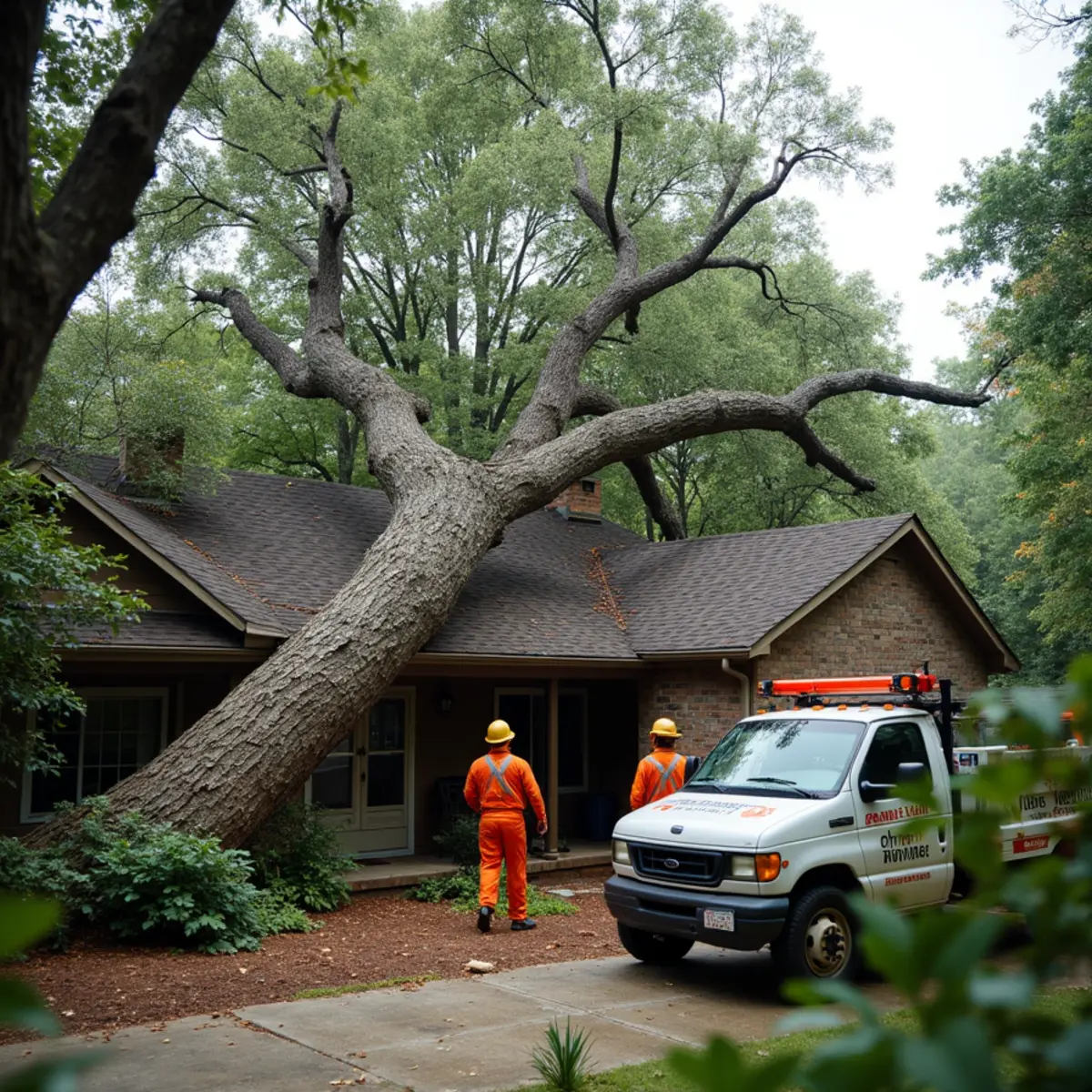
Removals on a bluff are technical — footing is poor, and dropping a tree the wrong way can damage the slope. We use rigging and, where access allows, crane assistance to take these trees down in control. If you've got tall trees leaning over your house from a slope, an assessment is worth it.
Bluff-Tree Warning Signs to Watch
- Roots exposed at the base where soil has washed away
- A new or increasing lean, especially downhill
- Cracked or heaving soil on the uphill side of the trunk
- Tall, top-heavy trees on the steepest, most exposed sections
- Small slope slips or soil movement after heavy rain
- Trees leaning over the house from an eroding slope
Erosion Control That Actually Helps Your Trees
Because bluff-tree failures start with lost soil, the best long-term protection is managing the water that carries that soil away. Directing downspouts and runoff away from the slope, keeping ground-cover plantings that hold the surface, and avoiding cuts and fill near the root zone all slow the erosion that undermines anchoring roots.
These measures won't rescue a tree already leaning on exposed roots, but on a healthy bluff they buy years. Pairing sensible drainage with periodic reduction of the tallest, most exposed trees is how riverfront owners keep their canopy without inviting a slope failure.
Removing a Tree Safely on a Steep Slope
Bluff removals are among the most technical jobs we do. Footing is poor, a felled tree can gouge the slope or slide, and there's often a house above and the river below. So we rarely fell these trees whole — we dismantle them in controlled sections with rigging, and where access allows, a crane lifts the weight straight out.
Planning the drop zone, the rigging points, and the disposal route before anyone climbs is what keeps a slope removal from becoming a second problem. It's slower and more deliberate than an open-lot job, and on a Chattahoochee bluff that care is exactly the point.
The Bottom Line
Bluff-side lots along the Chattahoochee offer stunning views and a hidden hazard: trees slowly losing their grip on eroding slopes. Watch for exposed roots and new leans, and reduce the tallest, most exposed trees before a storm finds them. For a bluff-property assessment, call Costeño Tree Services at (855) 615-0568.
How Costeño Tree Services Can Help
Related services and areas covered in this article:
Frequently Asked Questions
Watch for exposed roots at the base, a new or increasing lean, and cracked or heaving soil on the uphill side. Any of these on a steep slope warrants a professional look.
Yes. Erosion strips away the soil anchoring the roots, so a tree that's healthy up top can lose its grip on the slope and fail in a storm. It's a common bluff-lot hazard.
It is — footing is poor and the drop must protect the slope. We use rigging and crane access where possible. Call (855) 615-0568 for a bluff-property assessment.
About the Author
Costeño Tree Services
Costeño Tree Services is a locally owned, fully licensed and insured tree care company serving metro Atlanta since 2019. Our crews perform tree removal, pruning, stump grinding, and 24/7 storm response every day across Fulton, Cobb, DeKalb, and Gwinnett counties, following ANSI A300 pruning practices and ANSI Z133 safety standards. This guide is reviewed and updated as Atlanta rules and conditions change.