Managing Towering Loblolly Pines Near Power Lines in North Georgia Subdivisions
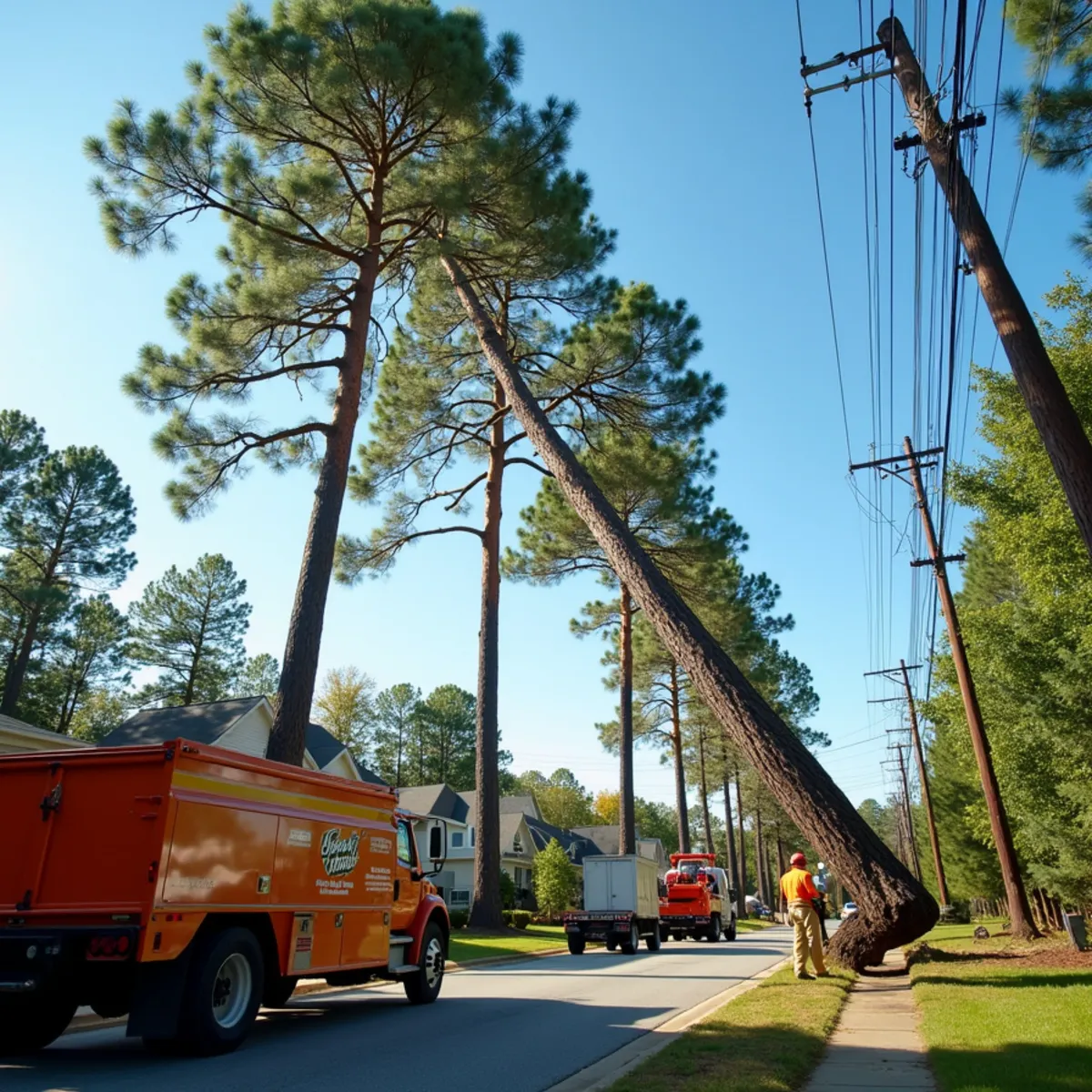
Towering loblolly pines threaten North Georgia power lines because they're tall, top-heavy, and shallow-rooted — when storm-saturated red clay loosens their grip, they lean or fall toward the lines. The service drop to your house is usually your responsibility; the primary lines are the utility's. Thinning pines before storm season lowers the risk.
The Subdivision Pine Problem
Drive through almost any North Georgia subdivision — Woodstock, Kennesaw, Duluth — and you'll see them: towering loblolly pines, often left in rows when the neighborhood was built on former timberland. They're beautiful and they're fast-growing, but they're also shallow-rooted, top-heavy, and planted right where power lines run.
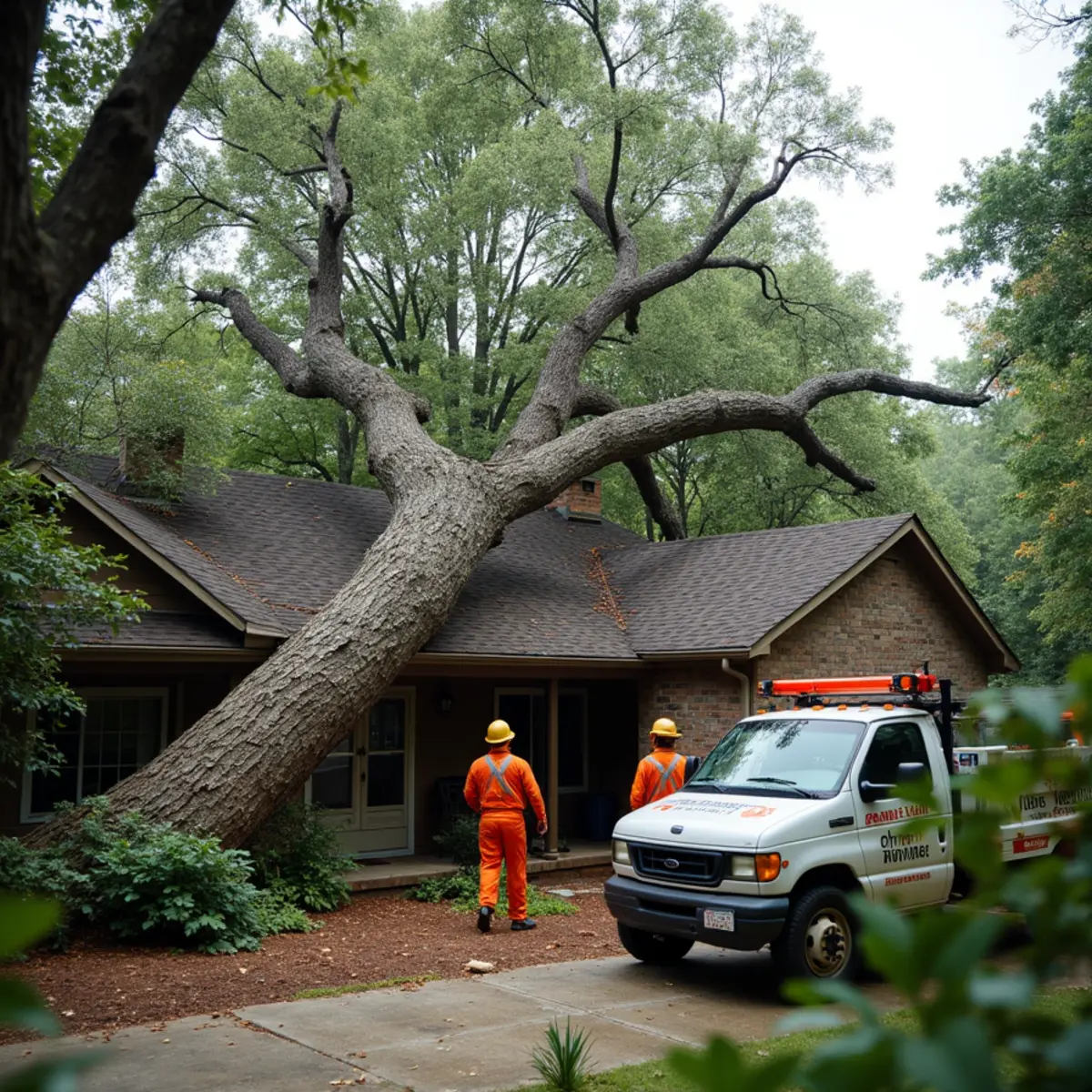
When a storm loosens the saturated red clay, these pines lean and fall toward the path of least resistance, which is frequently the lines and the homes below them. They're a leading cause of the outages that follow every big Georgia storm.
Who's Responsible for What
There's an important line of responsibility. The primary distribution lines running along the street are the utility's — Georgia Power and the local co-ops maintain vegetation around those. But the service drop, the line running from the pole to your house, and the trees threatening it are usually the homeowner's responsibility.
That means the pine leaning over your own service drop is your call to manage. Trying to clear it yourself near an energized line is dangerous; this is skilled work for a crew trained around utilities.
Managing the Risk
For a healthy pine that's simply too close to the lines, thinning and reducing it before storm season lowers the odds it comes down. For a leaning, damaged, or dead pine near a line, removal is usually the right answer — and it needs to be done carefully, dropping the tree away from the line, not toward it.
We handle clearance around your service drop safely, coordinate with the utility for anything touching the primary lines, and remove the pines that have become a genuine hazard. Getting ahead of it before the next storm beats calling during the outage.
Managing Pines Near Your Lines
- Know the boundary: primary street lines are the utility's; your service drop is yours
- Watch for pines leaning toward the drop after saturating rains
- Thin and reduce healthy pines that are simply too close to the wires
- Remove leaning, damaged, or dead pines near lines promptly
- Never attempt line-adjacent trimming yourself from a ladder
- Coordinate with Georgia Power for anything touching primary lines
Why Subdivision Pines Are Such a Problem
Drive through almost any North Georgia subdivision — Woodstock, Kennesaw, Duluth — and you'll see them: towering loblolly pines left in rows when the neighborhood was built on former timberland. They're beautiful and fast-growing, but they're also shallow-rooted, top-heavy, and planted right where the power lines run.
When a storm loosens the saturated red clay, these pines lean and fall toward the path of least resistance, which is frequently the lines and the homes below them. They're a leading cause of the outages that follow every big Georgia storm, and the risk only grows as the pines get taller.
Who Owns Which Line
There's an important line of responsibility. The primary distribution lines running along the street are the utility's — Georgia Power and the local co-ops maintain vegetation around those. But the service drop from the pole to your house, and the trees threatening it, are usually the homeowner's to manage.
That means the pine leaning over your own service drop is your call. Clearing it yourself near an energized line is dangerous work for a ladder and a pole saw; it's a job for a crew trained around utilities that drops every limb away from the wire, never toward it, and coordinates with the utility for the rest.
The Bottom Line
The tall pines that shade North Georgia subdivisions are the same ones that take out power in every storm. Getting ahead of the leaners near your service drop — before the outage — beats calling during it. For safe line-adjacent trimming and pine removal, call Costeño Tree Services at (855) 615-0568.
How Costeño Tree Services Can Help
Related services and areas covered in this article:
Frequently Asked Questions
The primary lines along the street are the utility's, but the service drop to your house and trees threatening it are usually the homeowner's. We clear your side safely and coordinate the rest.
They're tall, top-heavy, and shallow-rooted. When North Georgia's red clay saturates in a storm, the roots lose grip and the pines lean or drop — often toward lines and homes.
Yes, safely. We clear branches threatening the drop to your home and coordinate with Georgia Power for anything on the primary lines. Call (855) 615-0568.
About the Author
Costeño Tree Services
Costeño Tree Services is a locally owned, fully licensed and insured tree care company serving metro Atlanta since 2019. Our crews perform tree removal, pruning, stump grinding, and 24/7 storm response every day across Fulton, Cobb, DeKalb, and Gwinnett counties, following ANSI A300 pruning practices and ANSI Z133 safety standards. This guide is reviewed and updated as Atlanta rules and conditions change.