Stump Grinding vs. Excavation in Georgia Red Clay: Which Method Is Best?
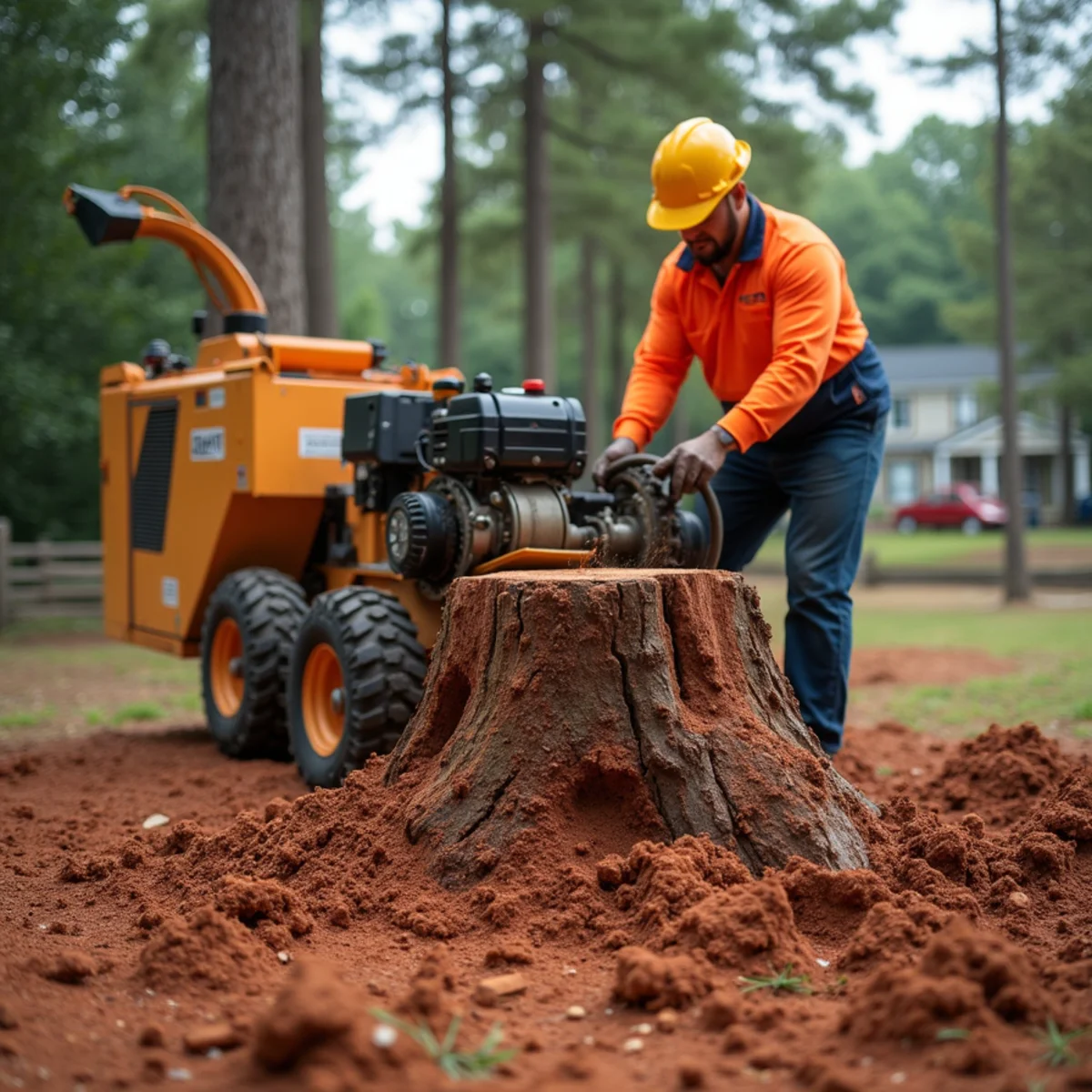
For most Atlanta yards, stump grinding wins over excavation. Grinding mulches the stump and major roots several inches below grade — fast, affordable, and easy on Georgia's dense red clay. Full excavation, which pulls the entire root ball, is worth it only when you're building, paving, or fighting an aggressive resprouter on the spot.
Two Very Different Approaches
Once a tree is down, the stump remains — and you've got two real options. Grinding uses a machine to chew the stump and major roots into mulch several inches below grade. Excavation pulls the entire root ball out of the ground, roots and all, leaving a large hole to backfill.
For the large majority of Atlanta homeowners, grinding is the right call. It's faster, more affordable, and far easier on your lawn. But there are cases where excavation earns its keep.
How Red Clay Changes the Equation
Georgia's heavy red clay is dense and holds moisture, which is why grinding is usually all you need — the ground closes up and settles well once the stump is mulched below the surface. Excavating in clay, by contrast, is heavy, messy work that leaves a big void and a pile of clay-caked roots to deal with.
The exception is when you're going to build or pour on the spot. Clay's density means leftover ground roots can interfere with a foundation, a concrete pad, or fence-post footings. If the plan is construction, excavation gives you clean ground to work with.
Making the Call
Grinding is best when you want to replant grass or beds, remove a tripping hazard, or stop a stump from sprouting. It's the standard choice for reclaiming a yard. We grind 4–8 inches below grade and can haul off the grindings and backfill with topsoil if you want it planting-ready.
Excavation is worth it when you're building on the spot, installing a driveway or patio, or removing a species that resprouts aggressively. It costs more and disturbs more ground, but it gives you a completely clean start.
Grinding vs. Excavation: Which Fits Your Plan
- Replanting grass or beds? Grinding is almost always enough.
- Building, paving, or setting fence-post footings on the spot? Excavation gives clean ground.
- Worried about a species that resprouts hard? Excavation removes more of the root system.
- On a budget and want minimal yard disruption? Grinding is cheaper and cleaner.
- Want the hole gone entirely? Ask about grindings haul-off and topsoil backfill.
- Dense red clay that holds water? Grinding settles well; excavation leaves a big void.
Why Red Clay Tilts the Decision
Georgia's heavy red clay is dense and holds moisture, which is why grinding is usually all you need — the ground closes up and settles well once the stump is mulched below the surface. Excavating in clay, by contrast, is heavy, messy work that leaves a large void and a pile of clay-caked roots to haul off.
The exception is construction. Clay's density means leftover ground roots can interfere with a foundation, a concrete pad, or fence-post footings over time. If the plan is to build or pour on the exact spot, excavation gives you a completely clean start that grinding can't match.
What 'Below Grade' Really Means
Standard grinding takes the stump and major surface roots four to eight inches below the surface — enough to replant grass or beds and stop the tripping hazard. It does not remove the entire root system, and it doesn't have to; the remaining roots simply decay in place over time.
If you want the spot planting-ready, ask the crew to haul off the grindings and backfill with clean topsoil rather than leaving the mulch to settle. On a resprout-prone species, grinding the major surface roots along with the stump greatly reduces regrowth, but full extraction is the surest fix.
The Bottom Line
For most Atlanta yards on red clay, grinding is the faster, cheaper, cleaner choice; excavation earns its keep only when you're building on the spot. Match the method to what comes next on that ground, and ask exactly what depth and cleanup the quote includes. For free per-stump pricing, call Costeño Tree Services at (855) 615-0568.
How Costeño Tree Services Can Help
Related services and areas covered in this article:
Frequently Asked Questions
Grinding is almost always more affordable and less disruptive. Excavation costs more because it removes the entire root ball and leaves a hole to backfill.
Yes. After grinding 4–8 inches below grade, most homeowners can replant grass or beds. We can haul off grindings and backfill with topsoil to make it planting-ready.
Often, yes. In dense red clay, leftover roots can interfere with foundations and footings. If you're building, excavation gives you clean ground. Call (855) 615-0568 to discuss.
About the Author
Costeño Tree Services
Costeño Tree Services is a locally owned, fully licensed and insured tree care company serving metro Atlanta since 2019. Our crews perform tree removal, pruning, stump grinding, and 24/7 storm response every day across Fulton, Cobb, DeKalb, and Gwinnett counties, following ANSI A300 pruning practices and ANSI Z133 safety standards. This guide is reviewed and updated as Atlanta rules and conditions change.